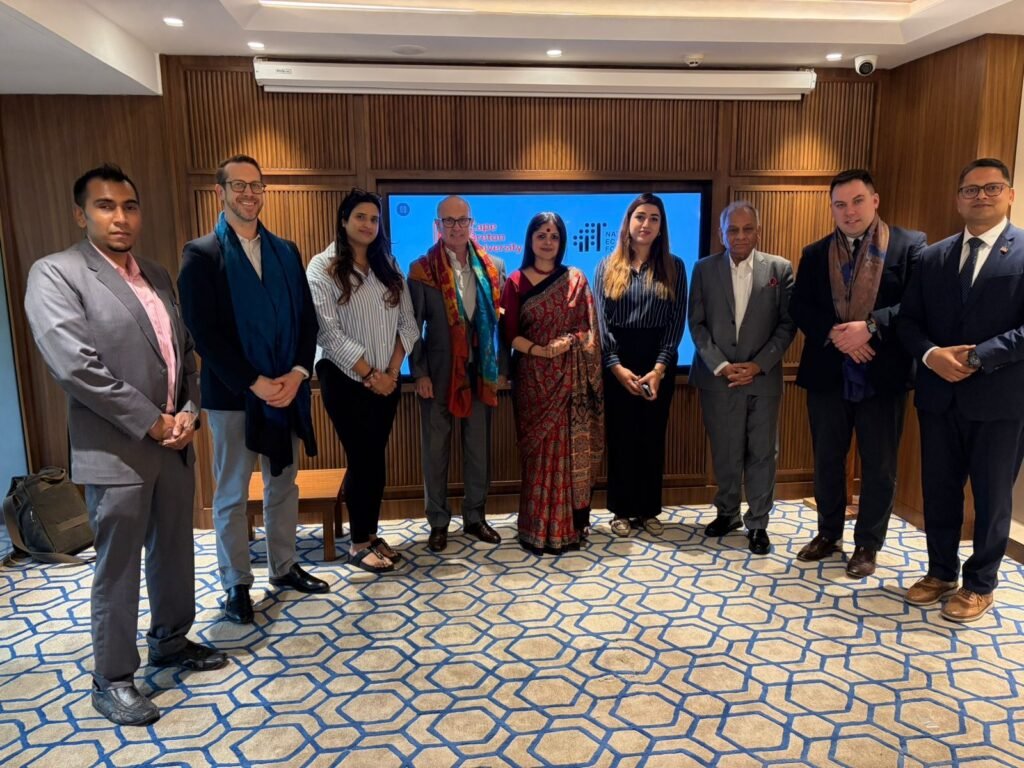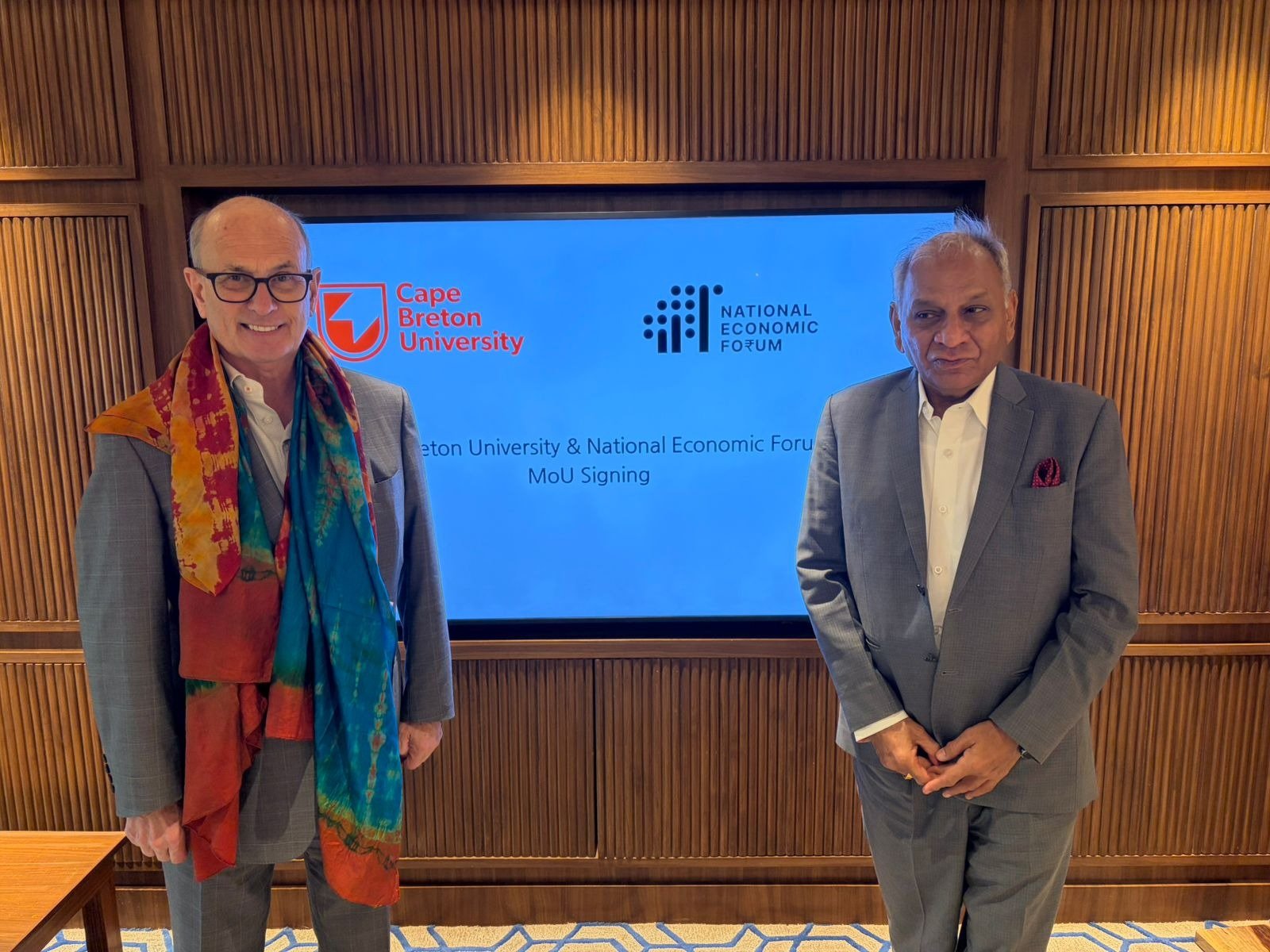
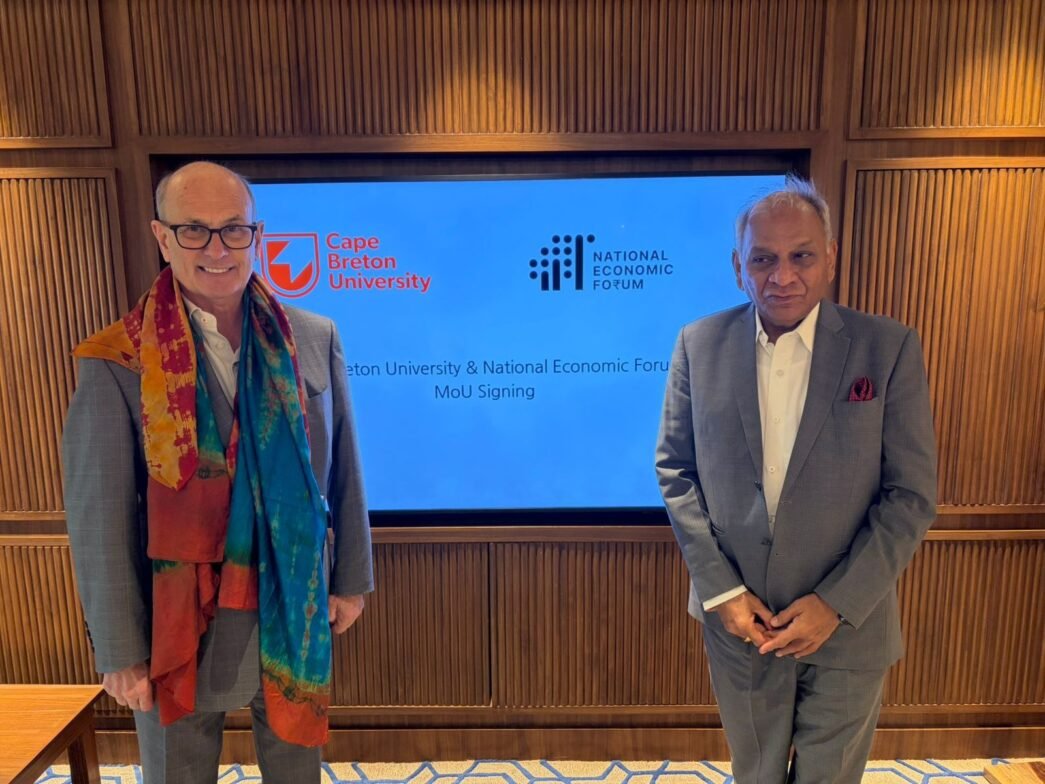
In a significant move aimed at deepening international academic cooperation, Cape Breton University and National Economic Forum have signed a non-commercial Service and Cooperation Agreement to enhance institutional engagement, talent mobility, and knowledge exchange between India and Canada.
The agreement was formalized during a high-level delegation visit to India, with David C. Dingwall and Jagdip Rana leading the signing process, signaling a shared intent to build long-term academic and institutional partnerships.
Building a Structured Framework for Global Academic Engagement
The partnership positions NEF as the official convening partner for CBU in India, enabling structured engagement with key stakeholders across government bodies and academic institutions. At its core, the collaboration is designed to create a focused platform for dialogue and cooperation, ensuring that international academic partnerships move beyond intent to tangible outcomes.
By facilitating stakeholder mapping, institutional outreach, and curated interactions, the agreement aims to strengthen collaboration in areas such as student mobility, faculty exchange, joint research, and institutional partnerships. This structured approach is expected to create more meaningful and outcome-driven engagements, aligning with the evolving priorities of both countries.
India Emerges as a Strategic Priority for Global Institutions
Highlighting the importance of India in CBU’s global roadmap, David C. Dingwall emphasized the country’s growing significance as a hub of academic and research excellence. With its expanding higher education ecosystem and increasing global integration, India is becoming a focal point for international universities seeking long-term partnerships.
The collaboration reflects a broader trend where global institutions are actively engaging with India to tap into its talent pool, research capabilities, and academic infrastructure, while also contributing to capacity building and knowledge exchange.
Enabling High-Impact, Outcome-Driven Partnerships
From NEF’s perspective, the partnership is designed to bridge the gap between global academic intent and on-ground execution. Jagdip Rana underscored the importance of structured engagement in creating impactful collaborations, particularly in areas that enhance research depth, institutional capacity, and cross-border talent movement.
The agreement is expected to pave the way for future initiatives, including joint research programs, academic exchanges, and policy-driven collaborations that contribute to a stronger India–Canada higher education corridor.
A Long-Term Vision for Global Knowledge Exchange
As international education becomes increasingly interconnected, partnerships like this highlight the shift towards more strategic, institution-led collaboration models. By focusing on long-term value creation rather than short-term engagements, the NEF–CBU MoU sets the foundation for a more integrated and future-ready academic ecosystem between the two nations.